
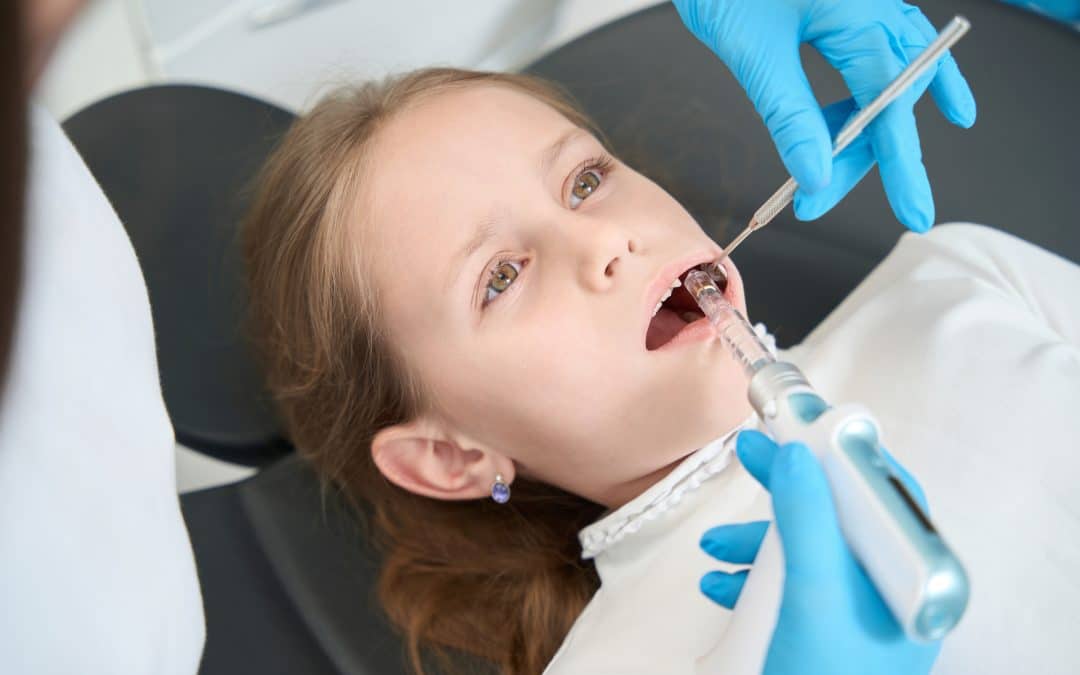
As a parent, you probably pay close attention to your child’s health, but their bite may not get the same attention as their teeth. A child can have a bright, healthy-looking smile while developing an orthodontic problem that is easier to address when identified early.
So, how can you tell whether your child’s bite is developing normally?
Knowing the warning signs—and knowing when to schedule an evaluation with a pediatric orthodontist—can help parents make informed decisions about their child’s developing smile.
What Does a Normal Bite Look Like?
A healthy bite allows the upper and lower teeth to come together comfortably when your child closes their mouth. The teeth should generally fit together without significant crowding, excessive overlapping, or unusual jaw positioning.
Children’s smiles naturally change as baby teeth fall out and permanent teeth come in, so a bite does not have to look “perfect” during every stage of development.
However, certain patterns can signal that your child would benefit from an orthodontic evaluation.
A pediatric orthodontist can examine your child’s teeth, jaw growth, and bite to determine whether development is progressing normally or whether monitoring or treatment may be appropriate.
7 Warning Signs Parents Should Watch For
1. Your Child’s Teeth Are Very Crowded
Crowding happens when there is not enough space for teeth to come in properly. You may notice teeth overlapping, twisting, or erupting in unusual positions.
A little irregularity can be normal while adult teeth are coming in, but significant crowding deserves professional attention.
An evaluation with a pediatric orthodontist can help determine whether your child simply needs monitoring or may benefit from early treatment.
2. Your Child Has an Overbite or Underbite
An overbite occurs when the upper front teeth extend significantly over the lower teeth. An underbite occurs when the lower teeth sit in front of the upper teeth when the mouth is closed.
Some bite differences are minor, while others may affect how the teeth and jaws function together.
Rather than trying to judge the severity at home, parents can have a pediatric orthodontist evaluate the bite and jaw relationship.
3. Your Child Has Difficulty Chewing or Biting
Does your child struggle to bite into certain foods? Do they avoid foods because chewing feels uncomfortable?
Difficulty chewing does not automatically mean there is an orthodontic problem, but persistent difficulty with biting or chewing is worth discussing with a dental professional.
A pediatric orthodontist can evaluate how the teeth meet and whether the bite may be contributing to the problem.
4. Your Child’s Teeth Don’t Meet Properly
When your child closes their mouth, do some teeth fail to touch?
An open bite can occur when there is a noticeable space between the upper and lower teeth when the mouth is closed. It may be associated with habits or developmental factors and should be evaluated individually.
If you notice an unusual gap when your child bites down, consider scheduling an assessment with a pediatric orthodontist.
5. Your Child Breathes Through Their Mouth Frequently
Occasional mouth breathing is common, especially during a cold or when allergies are acting up. However, persistent mouth breathing may be something parents should mention to their child’s healthcare or dental provider.
It can have several possible causes, so it should not automatically be blamed on an orthodontic issue.
A pediatric orthodontist can evaluate your child’s dental and facial development and determine whether an orthodontic assessment is appropriate.
6. Your Child Lost a Baby Tooth Very Early—or It Hasn’t Fallen Out
Baby teeth help maintain space for permanent teeth. Losing one prematurely or retaining a baby tooth longer than expected can sometimes affect how permanent teeth develop.
This does not mean every early or late tooth loss requires orthodontic treatment.
However, keeping your child’s dentist and pediatric orthodontist informed can help identify potential spacing or eruption concerns at the appropriate time.
7. Your Child’s Jaw Makes Sounds or Shifts When Opening
Clicking, popping, or unusual jaw movement can have different causes and does not necessarily indicate an orthodontic problem.
If your child experiences ongoing jaw discomfort, difficulty opening their mouth, or noticeable changes in jaw movement, bring it up with their dental or medical provider.
A pediatric orthodontist can assess the bite and jaw relationship as part of a comprehensive orthodontic evaluation.
When Should Your Child See a Pediatric Orthodontist?
One of the biggest misconceptions among parents is that they should wait until all of their child’s permanent teeth have erupted before scheduling an orthodontic evaluation.
The American Association of Orthodontists recommends that children have their first orthodontic checkup by age 7. This does not mean every 7-year-old needs braces.
Instead, an early evaluation gives an orthodontist an opportunity to monitor dental and jaw development and identify concerns that may benefit from attention while a child is still growing.
For families in Asheville and surrounding Western North Carolina communities, an early evaluation can also provide parents with a clearer understanding of what to expect as their child’s smile develops.
Does Every Child With Crooked Teeth Need Braces?
Not necessarily.
Children’s teeth can appear crooked temporarily as baby teeth are lost and permanent teeth erupt. Some spacing and unevenness may naturally change as development continues.
The important question is not simply whether the teeth look perfectly straight today. It is whether the teeth, jaws, and bite are developing appropriately.
That is why a professional assessment is more useful than trying to determine treatment needs from appearance alone.
A pediatric orthodontist can recommend observation, future treatment, or intervention depending on your child’s individual development.
Early Evaluation vs. Waiting
| If You Schedule an Early Evaluation | If You Simply Wait |
|---|---|
| You learn how your child’s bite is developing | You may remain unsure about the bite |
| Potential concerns can be monitored | Changes may go unnoticed |
| You receive guidance about treatment timing | You may not know when treatment could be appropriate |
| Growth and tooth eruption can be observed | You may miss an opportunity for timely evaluation |
| You can plan ahead financially and practically | Treatment decisions may come later and more suddenly |
An early consultation does not automatically mean braces. In many cases, the best recommendation may simply be to monitor your child’s development.
Why Parents in Asheville Should Pay Attention to Bite Development
For families around Asheville, North Asheville, Marion, and Rutherfordton, finding an orthodontic team that understands children’s developing smiles can make the process less intimidating.
At TS Orthodontics, parents can discuss concerns about crowding, bite development, tooth eruption, and treatment timing with an experienced orthodontic team.
Dr. Tim Scanlan and the TS Orthodontics team focus on helping patients understand their orthodontic options and feel comfortable throughout treatment.
If you have noticed something unusual about your child’s bite, you do not need to wait until the problem becomes obvious to everyone else. An evaluation can provide useful information about what is happening now and what may happen next.
What Parents Can Do at Home
You do not need to become an orthodontic expert to monitor your child’s smile.
Keep an eye out for:
- Teeth that overlap or appear severely crowded
- Difficulty biting or chewing
- A noticeable overbite or underbite
- An open bite when your child closes their mouth
- Early or delayed loss of baby teeth
- Persistent mouth breathing
- Jaw discomfort or unusual jaw movement
- Difficulty keeping teeth clean because of crowding
If you notice one or more of these signs, mention them during your child’s next dental visit or schedule an orthodontic evaluation.
Frequently Asked Questions
1. What age should a child see a pediatric orthodontist?
The American Association of Orthodontists recommends an initial orthodontic checkup by age 7. An early visit allows the orthodontist to evaluate developing teeth and jaws and determine whether monitoring or treatment is appropriate.
2. Does an overbite in a child always require braces?
No. The severity and cause of an overbite vary from child to child. A pediatric orthodontist can evaluate the bite and determine whether observation or treatment is recommended.
3. Is it normal for a child’s permanent teeth to come in crooked?
Some temporary crookedness can occur as permanent teeth erupt. However, significant crowding, overlapping, or unusual tooth positions should be evaluated rather than assumed to be temporary.
4. Can a child need orthodontic treatment before all permanent teeth come in?
Yes. Some orthodontic concerns can benefit from evaluation or treatment while a child is still developing. However, treatment timing depends on the child’s individual dental and jaw development.
5. Where can Asheville-area parents get a child’s bite evaluated?
Families in Asheville, North Asheville, Marion, Rutherfordton, and surrounding communities can contact TS Orthodontics to discuss their child’s orthodontic needs and schedule an evaluation.
The Bottom Line
Your child’s bite does not have to look perfect to be healthy, and not every crooked tooth requires immediate treatment. But noticeable changes in the way your child’s teeth or jaws fit together should not be ignored.
The earlier a concern is identified, the more information parents have about their child’s development and potential treatment timing.
If you are unsure whether your child’s bite is developing normally, a consultation with a pediatric orthodontist can give you answers and peace of mind.
TS Orthodontics Locations
| Office Location | Phone Number |
| Asheville, NC | (828) 270-7638 |
| North Asheville, NC | (828) 248-0582 |
| Marion, NC | (828) 408-0458 |
| Rutherfordton, NC | (828) 276-8479 |
If you have concerns about your child’s bite, contact TS Orthodontics to schedule an orthodontic evaluation and learn what may be best for your child’s developing smile.