
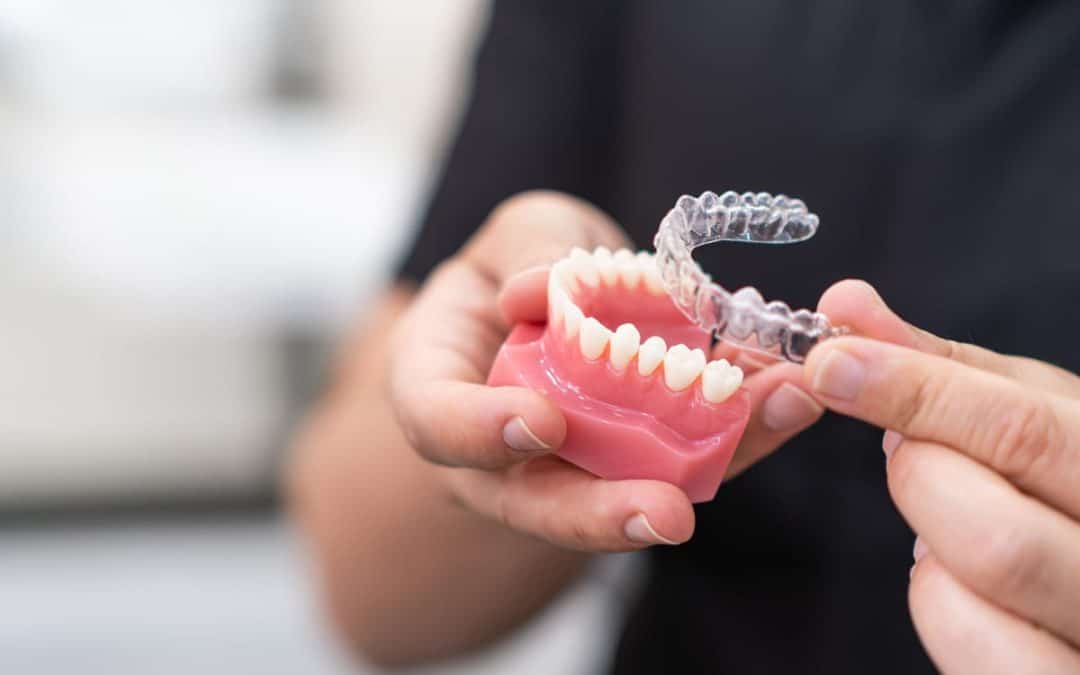
Curious about what actually happens inside your mouth with Invisalign aligners in Royal Pines? You’re not alone. Many patients see the clear trays and wonder how a thin piece of plastic can actually shift teeth. The science behind it is fascinating — and understanding it helps you commit fully to your treatment plan.
At TS Orthodontics – Asheville, Dr. Timothy Scanlan walks every patient through the process clearly. This article breaks down exactly how Invisalign works from day one to your final tray. No guesswork, no vague promises — just honest education about the mechanics of your smile transformation.
How Invisalign Aligners Actually Move Your Teeth in Royal Pines
Invisalign works through a principle called controlled force application. Each aligner is custom-fabricated to fit your teeth with slight inaccuracies — intentional ones. Those tiny discrepancies create gentle pressure on specific teeth.
Your teeth sit in a socket surrounded by a periodontal ligament. When consistent pressure is applied, that ligament stretches on one side and compresses on the other. Over time, bone remodels itself around the tooth’s new position. This biological process is the same whether you use braces or clear aligners.
Each aligner moves teeth roughly 0.25 millimeters. That sounds tiny, but across dozens of trays, the cumulative shift is significant. The movement is gradual, predictable, and precisely planned using 3D imaging technology before your first tray is ever made.
Understanding Your Aligner Change Schedule
Most patients in Royal Pines change their aligners every one to two weeks. Dr. Scanlan determines your specific schedule based on your treatment complexity and how your teeth respond. Wearing each tray for the correct duration is critical.
You must wear your aligners for 20 to 22 hours daily. Removing them for longer disrupts the continuous pressure your teeth need. Think of it like this: if you skip wearing your aligner, your teeth begin drifting back. The next tray may not fit correctly as a result.
Here is what a typical aligner progression looks like:
- Tray 1–5: Initial movement begins, often targeting front teeth or spacing
- Tray 6–15: Mid-treatment refinements, rotation and torque corrections
- Tray 16+: Fine-tuning positions and closing residual gaps
- Final trays: Holding and settling teeth into target alignment
Skipping ahead to the next tray early does not speed up treatment. It actually compromises results. Each tray must complete its assigned movement before the next one takes over.
What Are Invisalign Attachments and Why Do You Need Them
Some teeth need more than gentle tray pressure to move correctly. That’s where attachments come in. Attachments are small, tooth-colored resin bumps bonded directly onto specific teeth.
They act like handles. The aligner grips the attachment to apply rotational, vertical, or angled forces that a flat tray alone cannot achieve. Without attachments, complex movements like rotating a canine or intruding a molar would be nearly impossible with clear aligners.
Not every patient needs attachments. However, most moderate-to-complex cases do. Here is what patients should know about them:
- They are placed quickly and painlessly at your orthodontist’s office
- They blend with your tooth color and are barely noticeable
- They are removed at the end of treatment, leaving no permanent marks
- Their placement is planned digitally before your treatment even begins
- They make your aligner slightly more snug but do not cause lasting discomfort
As a trusted provider among Orthodontic Specialists In Asheville Nc Royal Pines, Dr. Scanlan carefully evaluates whether attachments are necessary for your unique tooth movements. Every decision connects directly to achieving accurate, lasting results.
What Happens During Invisalign Refinements
Refinements are additional aligner sets prescribed after your initial series ends. They are extremely common — not a sign that something went wrong. Think of them as a precision adjustment phase.
Even with perfect 3D planning, teeth are living structures. They sometimes do not move exactly as predicted. Biology introduces minor variations. Refinements allow Dr. Scanlan to correct any residual misalignment with a new set of custom trays.
Refinements typically include:
- A new scan or impression of your current tooth positions
- Updated digital treatment planning through Invisalign’s ClinCheck software
- A new series of aligners targeting remaining corrections
- Possible placement of new or adjusted attachments
For patients in Royal Pines, the refinement phase is a normal and expected part of comprehensive Invisalign treatment. Some patients need only a few extra trays. Others may complete a full second series for more complex finishing work.
Tips for Getting the Best Results From Your Invisalign Treatment
Understanding the mechanics is step one. Following through with the right habits ensures your teeth actually reach their destination. Compliance is the single biggest factor that separates patients who love their results from those who feel disappointed.
Keep these habits in mind throughout your treatment:
- Wear aligners for at least 22 hours every day without exception
- Remove aligners only to eat, drink anything except water, and brush
- Clean your aligners with a soft toothbrush and lukewarm water daily
- Never bite your aligners into place — use a chewing tool or finger pressure
- Attend every scheduled check-up with Dr. Scanlan to monitor progress
For teens in the area, understanding compliance is especially important. Parents can learn more through our Pediatric Orthodontist In Rutherfordton Nc Royal Pines resources, which outline age-specific considerations for clear aligner success.
Also, transition to each new tray at night before bed. Your teeth adapt during sleep, and any initial tightness is gone by morning. This simple habit makes each aligner change far more comfortable.
Conclusion: Your Invisalign Journey Starts With Understanding
Knowing what actually happens inside your mouth with Invisalign aligners in Royal Pines removes the mystery from treatment. You understand why wearing your trays consistently matters. You understand why attachments exist and why refinements are part of the process — not a setback.
Dr. Timothy Scanlan and the TS Orthodontics – Asheville team are committed to educating every patient before, during, and after treatment. An informed patient gets better results because they stay consistent and engaged throughout the process.
Ready to see your custom Invisalign plan and learn exactly how your teeth will move? Book Now to schedule your appointment with our team.
Frequently Asked Questions
How long does Invisalign treatment typically take in Royal Pines?
Most patients complete Invisalign treatment in 12 to 18 months. Complex cases may take longer. Dr. Scanlan provides a personalized timeline after reviewing your 3D scans and treatment goals during your consultation.
Is Invisalign as effective as traditional braces for moving teeth?
For mild to moderate alignment issues, Invisalign is highly effective. Advanced cases involving significant bite correction may still benefit from braces. Dr. Scanlan evaluates your specific needs and recommends the best option for your situation.
Do Invisalign aligners hurt when you first put them in?
Most patients experience mild pressure or tightness when switching to a new aligner. This discomfort typically fades within 24 to 48 hours. It signals that the aligner is actively working to move your teeth into their next position.
What happens if I lose an Invisalign tray?
Contact Dr. Scanlan’s office right away. Depending on where you are in treatment, you may move to the next tray early or return to the previous one temporarily. Losing a tray is manageable — the key is addressing it quickly to avoid disrupting your progress.
Why do some teeth not move as expected during Invisalign treatment?
Teeth are living structures embedded in bone. Factors like bone density, tooth shape, and patient compliance all affect movement predictability. Refinements are designed specifically to address cases where planned movement does not fully occur, bringing results back on track.